

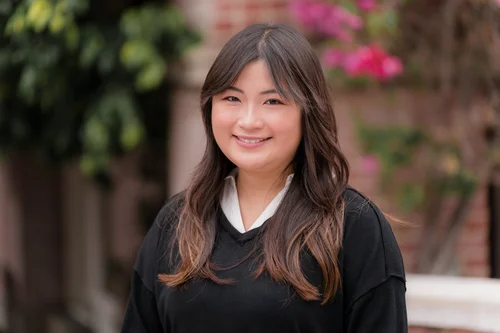
Judy TamAMFT · Therapy for people-pleasing & finding your voice
Online therapist in California for young adults in their 20s and 30s — for people-pleasing, identity, and learning to want things on your own terms.
Is this you?
Some people become so used to adapting to others that they don't fully realize how often they override themselves in the process.
They know how to keep the peace. They know how to anticipate the needs of others, avoid disappointing people, and stay emotionally easy for others.
What is often harder is recognizing when those strengths slowly begin to create suffering, both internally and relationally.
Sometimes that looks like self-abandonment. Sometimes it looks like resentment, emotional exhaustion, difficulty expressing needs directly, or unconsciously expecting others to operate by the same standards you learned to survive by.
A lot of my work is with young adults and Asian-American clients who are trying to make sense of the tension between caring deeply about their families and slowly figuring out who they are outside of those expectations.
Part of therapy is helping people understand where some of these patterns came from and why they made sense in the first place — usually in relationships, family systems, and cultural environments where maintaining connection, meeting expectations, or avoiding conflict carried a great deal of importance.
For many people, expressing a need isn't the difficult part. The difficult part is tolerating the guilt, fear, or discomfort that can follow.
You're allowed to have wants of your own — and to take up the space it takes to name them.
What the work can feel like.
A lot of therapy is helping people understand the patterns they developed, where those patterns came from, and why they made sense at the time. Many people come in frustrated with themselves, believing they are "falling behind," "too emotional," "bad at relationships," or somehow the reason painful patterns keep repeating in their lives. Part of the work is slowing things down enough to understand what shaped those patterns, rather than immediately seeing them as personal flaws.
I also try to hold the bigger picture people are living in. For many Asian-American clients especially, family expectations, obligation, guilt, achievement pressure, and the things that go unsaid are often deeply tied to how someone learned to relate to themselves and others. My hope is that clients do not have to spend a long time explaining those dynamics before we can get to what is feeling difficult underneath.
A lot of the work is relational. Sometimes that means helping people reconnect with their own needs, limits, anger, or preferences. Sometimes it means recognizing when survival strategies that once protected them are now creating resentment, exhaustion, conflict, or distance in relationships.
Grief is something I hold with a lot of care. It rarely moves in a straight line, and people often judge themselves for how they are grieving. Therapy is not about rushing someone to "move on" — it is about making space for what the loss means and helping people carry it in a way that feels more manageable and meaningful.
With couples, I often focus on helping people communicate the more vulnerable thing underneath the conflict in a way that can actually be heard.
You don't have to have it figured out to begin. You just have to be a little curious about what you want.
How I work.
A lot of my work involves helping people separate themselves from the problems they are struggling with, rather than experiencing themselves as the problem. When there is a little more space between you and the anxiety, self-criticism, conflict, grief, or relationship pattern, there is often more room to understand what is happening and decide how you want to respond to it.
I tend to work in a thoughtful, collaborative, and emotionally focused way. Rather than rushing to "fix" a feeling, I usually spend time helping people understand what the feeling may be connected to, where certain patterns developed, the roles they learned to take on in relationships, and the stories they carry about themselves. Part of the work is noticing how past relationships and experiences can continue shaping present ones.
My approach draws from Emotionally Focused Therapy, Narrative therapy, Internal Family Systems, attachment work, and CBT, depending on the person and what they are needing. For more on why this kind of work changes things over time, see Why Therapy Works.
What I help with.
The themes that come up most in my work — each links to more on how Align approaches it:
Who I work with.
Young adults in their 20s and 30s, with particular care for Asian-American clients navigating identity, family, and belonging. Individual, couples, and premarital therapy. Culture is more than ethnicity to me: your age, parenting, gender, religion, sexual orientation, and financial reality all shape what you bring in.
Training & credentials.
- Associate Marriage and Family Therapist, California BBS #137633 — supervised by Jasmeet Bhullar, LMFT #117019
- Formal training in Emotionally Focused Therapy (EFT) and Internal Family Systems (IFS)
- Practicum at Pepperdine University Counseling Center (PUCC), with formal training in Narrative Therapy
- Master's in Clinical Psychology, Pepperdine University
- Bachelor's in Psychology & Social Behavior, University of California, Irvine
- AMFT at Couples TLC Counseling; former Clinician at Stowell Learning Center
Logistics.
Sessions are held entirely online, on a secure platform, anywhere in California. Availability is flexible: Sunday through Friday, mornings, afternoons, and evenings. The regular rate is $200 per individual session ($250 for couples), with a limited number of reduced-fee slots and out-of-network reimbursement available. Start with a free 15-minute consultation.
Questions about working with Judy — answered.
Who does Judy work best with?
Young adults in their 20s and 30s who are great at reading everyone else's needs and lose track of their own — often people-pleasers working on voice, agency, and identity.
Does Judy have experience with Asian-American or cultural-identity issues?
Yes. A lot of my work sits right in the tension between honoring your family and authoring your own life — the guilt, the duty, the in-between of growing up across cultures.
What's Judy's therapy style?
I tend to work in a thoughtful, emotionally focused, and collaborative way. A lot of therapy involves slowing patterns down enough to understand where they came from, why they made sense, and how they may still be shaping relationships in the present.
What does a first session with Judy look like?
Mostly understanding what brought you in and what you're hoping for. There's no pressure to perform — we move at a pace that lets you actually open up.
How will I know if therapy with Judy is helping?
Often, it looks less like a dramatic breakthrough and more like understanding yourself with greater clarity and less self-blame. Therapy can help people reconnect with themselves: their needs, preferences, boundaries, anger, desires, and sense of identity outside the roles they learned to play for others. Often, progress looks like tolerating the discomfort that can come with honesty, boundaries, disappointment, or conflict without abandoning yourself in the process.