Disordered eating therapy for the food math.
Online therapy in California for disordered eating, restriction, binge cycles, and body image — weight-inclusive, non-diet, body-respectful care for adults in their 20s and 30s.
Restriction. Binge cycles. The exercise that's really about earning food. The running tally in your head. And underneath all of it — the slow realization that it was never quite about the food.
The short version.
- What we treat — restriction, binge cycles, the food math, body image, compensatory exercise, and sub-clinical patterns that don't meet diagnostic criteria
- Approach — weight-inclusive, non-diet, body-respectful. CBT for the food rules, DBT and Compassion-Focused Therapy for what sits underneath
- Who leads it — Molly Binenfeld, LMFT (CA #151728). Previously Director of Clinical Services at Alsana: An Eating Recovery Community; currently Clinical Director at an intensive outpatient program for college students. Member of the International Association of Eating Disorders Professionals (IAEDP)
- ED caseload — about half of Molly's caseload is disordered eating
- Format — entirely online, anywhere in California, weekly 50-minute sessions
- Sessions — available in English, Spanish (Fidel Quintanilla), and Hindi and Punjabi (Jasmeet Bhullar)
- Fee — $200 a session, out-of-network with monthly superbills, a few reduced-fee places
- Medical oversight — we assess at consultation whether outpatient care is appropriate. Where acuity is high, we help you find the right level of care instead
- Level of care — weekly outpatient therapy. We refer out for residential, PHP and IOP
What disordered eating actually is.
Disordered eating is a relationship with food and body that's quietly running underneath everything else — organizing your day, your mood, and your sense of worth around rules, numbers, and control. It doesn't always meet the criteria for a named eating disorder, and it doesn't have to in order to be worth treating.
Often it looks like the opposite of a problem. It looks like wellness. Discipline. “Being good.” That camouflage is part of what makes it so hard to name — and why so many people carry it for years before getting help.
How it shows up.
The food math runs constantly, even when no one can see it. Some of the ways it shows up:
- The food math — the calorie counting, the macros, the constant mental tally
- Restriction, then the binge, then the guilt, then the restriction again
- Exercise that's about earning or undoing food, not moving your body
- Rules about what's allowed, when, and how much
- A relationship with the mirror that you'd never speak aloud
- The messages about food and body you absorbed from family, still taking up space
What's underneath.
Disordered eating is rarely about food. It's usually about something the food is managing:
- Control — a way to feel in charge when life feels like it isn't
- Core shame — a body and self that never feel like enough
- Emotion regulation — food as comfort, punishment, or numbing
- Family and cultural messages about food, body, and worth
- Anxiety and perfectionism — the same patterns, pointed at the plate
Why weight-inclusive care works here.
Most people arriving here have already tried the other thing: the plan, the reset, the discipline. It works for a while and then it doesn't, and the failure gets read as a personal one. Weight-inclusive care starts from a different premise — that the eating is doing a job, and you can't take it away without understanding the job first.
- Weight-inclusive, non-diet — we don't set weight loss as a treatment goal or use it as a measure of progress. Recovery isn't a body; it's a life that isn't organized around food
- CBT — for the rules and the thinking that enforces them. The math, the categories, the calculation before every meal
- DBT — for the emotion regulation the eating has been handling. If food is how distress gets managed, you need somewhere else for the distress to go before the food can change
- Compassion-Focused Therapy — for the shame underneath, which is usually the part that keeps the cycle running
- Coordinated care — we work alongside physicians and dietitians rather than in isolation, because eating disorders are medical as well as psychological
The questions you should be asking.
The National Alliance for Eating Disorders publishes a list of twenty questions to ask any outpatient eating disorder provider. Here are our answers to the ones that matter most. Ask us the rest on a consultation call — and ask them of everyone else you're considering.
What professional training do you have in eating disorders specifically?
Molly Binenfeld, LMFT was Director of Clinical Services and Primary Therapist at Alsana: An Eating Recovery Community, a dedicated eating disorder treatment center. She is currently Clinical Director and Senior Primary Therapist at an intensive outpatient program serving college students, where the clinical model treats primary mental health conditions using DBT, ACT, CBT and experiential therapies, working alongside university counseling centers for students who need more than a campus service can provide.
She is a member of the International Association of Eating Disorders Professionals (IAEDP), and holds specialty-level training in assessing suicidality, in Dialectical Behavior Therapy, and in working with college students.
What percentage of your practice is eating disorders?
About half of Molly's caseload. The National Alliance tells clients to ask this question directly, so here's the real figure rather than a vague one.
What is your therapeutic approach?
CBT for the food rules and thinking patterns, DBT for emotion regulation, and Compassion-Focused Therapy for the shame underneath — all weight-inclusive and non-diet. We don't use meal plans as a control mechanism or treat weight change as the measure of progress.
How do you define recovery?
Not a number, and not a body. We'd say recovery is when food stops being the loudest thing in the room — when a meal is a meal, when a day out doesn't require planning around what you'll eat, when the mental tally quiets enough that you notice you're thinking about something else.
It rarely arrives all at once, and it isn't linear. Most people describe it as the volume coming down rather than the thought disappearing. That's a real outcome, not a lowered bar.
Do you work with a treatment team?
Yes. Eating disorders are medical as well as psychological, and we coordinate with physicians and dietitians rather than working in isolation. If you already have a treatment team, we'll work with them; if you don't and you need one, we'll help you build it.
Will I need a medical evaluation before starting?
We don't require a medical evaluation before your consultation, but we do assess whether outpatient therapy is the appropriate level of care for you — and that assessment happens before we start, not after.
Eating disorders carry medical risk that outpatient sessions can't monitor. If your presentation suggests you need more support than weekly therapy provides, we'll say so on the consultation call and help you find it. Where ongoing medical or nutritional oversight is warranted, we'll ask you to have a physician and dietitian involved, and we'll coordinate with them.
Molly assesses this from experience rather than a checklist: she has been a Clinical Director at both an eating disorder treatment center and an intensive outpatient program, and holds specialty-level training in assessing suicidality. Deciding who is appropriate for outpatient care — and who isn't — has been a core part of her clinical work.
How are family members included?
Encouraged, when it would help. Eating disorders rarely sit only inside one person — the family often has its own history with food, bodies and control, and that history usually shows up in the room whether or not anyone names it.
We have real capacity here rather than a policy: Fidel Quintanilla, AMFT was Assistant Program Director for the treatment of Families, Couples, OCD and Depression at Psychological Care and Healing Center, and Jasmeet Bhullar, LMFT works in Bowen Family Systems. If family sessions would help, we can run them alongside your individual work.
Do you have experience with specific populations or co-occurring diagnoses?
We work with anyone with disordered eating, though most of our clients are in their 20s and 30s. We are LGBTQ+ affirming.
Co-occurring diagnoses are common rather than exceptional — anxiety, depression, OCD and trauma all travel with disordered eating — and we treat them as part of the work rather than as something to be handled elsewhere first.
What do you charge, and do you take insurance?
Sessions are $200. We're an out-of-network provider and give you monthly superbills to submit for reimbursement; many PPO plans cover a meaningful portion. We hold a limited number of reduced-fee places — ask on the consultation call.
How therapy helps.
We work with all of it — the named eating disorders and the quieter patterns that hide behind health language — with weight-inclusive, non-diet, body-respectful care. The goal isn't a different body. It's a life that isn't organized around food and control.
We help you understand what the eating is managing, build other ways to meet those needs, and slowly loosen the rules' grip. For the neuroscience of why these patterns become automatic — and how they change — see Why Therapy Works.
Our approach at Align.
We draw on CBT for the food rules and thinking patterns, ACT and IFS for the parts and values underneath, and attachment work for the roots. Weight-inclusive and non-diet throughout. When medical oversight is needed, we coordinate with physicians and dietitians.
Sessions are weekly, 50 minutes, online, with a California-licensed therapist who's yours alone. $200 per session.
Who does this work at Align.
Molly is the only clinician here who takes eating disorder cases. That's deliberate — eating disorders need specific training and a specific stance toward food and body, and a therapist who treats them occasionally isn't the same as one who has run the programs. Two of our other therapists support the work when family sessions would help.
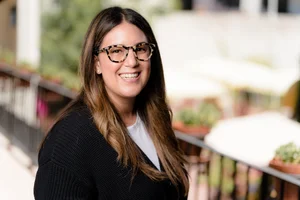 Molly Binenfeld, LMFT (CA #151728) — takes all of our eating disorder work, and about half her caseload is disordered eating. Previously Director of Clinical Services and Primary Therapist at Alsana: An Eating Recovery Community, and currently Clinical Director and Senior Primary Therapist at an intensive outpatient program for college students. IAEDP member, with specialty-level training in assessing suicidality and in Dialectical Behavior Therapy.
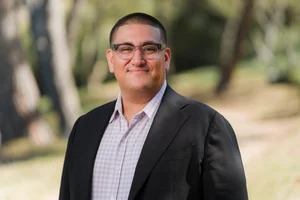 Fidel Quintanilla, AMFT (CA #125756) — joins for family sessions where the eating disorder is tangled up with family history around food, bodies and control. Previously Assistant Program Director for the treatment of Families, Couples, OCD and Depression at Psychological Care and Healing Center — a role covering four treatment units.
 Jasmeet Bhullar, LMFT (CA #117019) — Founder and Clinical Director, and also available for family work. Bowen Family Systems, with 15+ years of family and couples practice.
Who we work with.
Adults in their 20s and 30s whose relationship with food has quietly taken over — including the people whose patterns look like wellness from the outside. We work with sub-clinical disordered eating as readily as diagnosed eating disorders, and we believe you don't have to be “sick enough” to deserve help.
What we don't do.
We provide weekly outpatient therapy. We're not the right fit if you need a higher level of care — residential treatment, a partial hospitalization program, or an intensive outpatient program. Eating disorders are one of the areas where that distinction matters most, because medical instability can move quickly and outpatient sessions can't monitor it.
Molly has worked at those levels of care herself — as a Marriage and Family Therapist at Exodus Recovery Crisis Residential Treatment Program, in clinical leadership at a dedicated eating disorder treatment center, and currently as Clinical Director of an intensive outpatient program. She also holds specialty-level training in assessing suicidality. So when we say a higher level of care is needed, it's a judgment made from the inside — and we'll help you find it rather than starting work we can't safely see through.
We also don't provide medical or nutritional care. We coordinate with physicians and dietitians; we don't replace them. And we don't treat eating disorders in children or adolescents — our practice is adults in their 20s and 30s.
Disordered eating therapy — common questions.
Do I have to have a diagnosed eating disorder to come?
No. Much of what we treat is sub-clinical — the patterns that don't meet diagnostic criteria but still run your life. You don't have to be “sick enough.” If food and body are taking up more space than you'd like, that's enough.
What does weight-inclusive, non-diet care mean?
It means we don't treat weight loss as a goal or health metric, and we don't prescribe diets. We focus on your relationship with food, body, and self — not on changing your body to fit an external standard.
Can disordered eating be treated online?
Yes, for most presentations. Some severe eating disorders need medical oversight or a higher level of care; if so, we'll help you find it and can work alongside that team. For most disordered eating, online therapy is effective.
Isn't my eating just about discipline and health?
It can be hard to tell from the inside — disordered eating often disguises itself as wellness. If the rules cause distress, drive guilt, or organize your life, that's worth exploring, regardless of how healthy it looks.
Will you make me eat things or weigh me?
No. We're a talk-therapy practice using a weight-inclusive approach. We don't weigh you or impose food rules. When meal support or medical monitoring is needed, we coordinate with the right specialists.
More resources.
- Questions to ask an eating disorder provider — the National Alliance's own twenty-question checklist, and the source of the answers above
- findEDhelp — the Alliance's national treatment directory, searchable by zip code, insurance, level of care and treatment approach
- Levels of care explained — useful if you're unsure whether outpatient is the right starting point
- ANAD treatment directory — a second directory, including free peer support groups
The National Alliance for Eating Disorders runs a free helpline staffed by licensed therapists who specialize in eating disorders: 866-662-1235, Monday to Friday, 9am–7pm EST. It is not a crisis line.
If you're in crisis, please don't use this page as your point of contact. Call or text 988 — the Suicide and Crisis Lifeline — or go to your nearest emergency room.
Related specialties.
- Anxiety & overthinking — the worry that drifts from one thing to the next
- OCD & intrusive thoughts — the thought that demands something before it lets you go
- People-pleasing — the yes you didn't quite get to choose
- Family boundaries — holding a limit with the people who raised you
- All topics & patterns — the full list of what we work with