

Trauma therapy in California — for the past that's still on duty.
Online trauma therapy in California for adults in their 20s and 30s, with EMDR and Internal Family Systems. For the single event that won't stay filed, and the slower kind of hurt that never got a name.
Most people who need trauma therapy aren't sure what happened to them counts. Clinically, trauma is less about the size of the event than about what it left behind: an experience that overwhelmed your capacity to cope, stored by the nervous system as if it were still happening. There's a loud version, post-traumatic stress disorder, with flashbacks, nightmares and a body that startles at things nobody else in the room notices. And there's a quiet one. No single event you'd call trauma. Just a reaction that's bigger than the moment, a part of you that never quite stands down, and a feeling you can't reach by talking about it. Both are treatable. The quiet one usually waits longest, because it doesn't look like the movies.
What trauma actually is.
The word has gotten loose in everyday speech, which makes people hesitate to use it about themselves. The clinical meaning is narrower and more useful. Trauma is what happens when an experience exceeds what your system could process at the time. The memory doesn't get filed the way other memories do. It stays raw, with the images, the body sensations and the beliefs from that moment still attached, and anything that resembles it closely enough can set it off.
That's why trauma so often feels illogical from the inside. You know you're safe. You know it was years ago. Your body hasn't received the memo. Julia describes what EMDR is for in exactly those terms: it can help process experiences that still feel emotionally charged, even when you logically know better.
Clinicians sometimes separate "big-T" trauma (assault, accidents, combat, violence, a sudden death, a medical emergency) from "small-t" trauma: repeated humiliation, emotional neglect, growing up around a parent's unpredictability, a relationship that slowly made you smaller. The second list is the one people talk themselves out of. On consultation calls, some version of it wasn't that bad, other people had it worse is one of the most common things we hear.
We have a strong opinion about that sentence. Ranking your pain against someone else's has never once calmed anyone's nervous system down. All it does is delay the help.
When the overwhelm happened over and over, often in childhood or inside a relationship you couldn't leave, the result is sometimes called complex trauma. The World Health Organization's ICD-11 now recognizes complex PTSD as its own diagnosis. It tends to show up less as flashbacks and more as a way of living: chronic shame, difficulty trusting, a sense of self built around staying safe.
The three parts still on duty after trauma — and what they're guarding.
Julia works from Internal Family Systems, which treats the mind as made of parts, each one trying in its own way to protect you. After trauma, three of them tend to take up permanent posts. None of them is the problem. Each one is doing a job that ended a long time ago, and nobody told it the job was over.
The alarm. The part that scans. It reads rooms, tracks tone of voice, notices where the exits are, and jolts you awake at 3 a.m. It's the reason your body reacts before you know what you're reacting to. Its job is to make sure you're never caught off guard again.
The shutter. The part that closes things down. It numbs, goes blank, steers you around the street or the song or the conversation, and keeps you busy enough that nothing underneath ever gets a turn. Its job is to keep the feeling from arriving at all.
The narrator. The part that explains. It writes the version where it was your fault: you should have seen it coming, said no, left sooner. That story hurts, but it protects in a strange way. If it was your fault, it was controllable, and controllable things can be prevented. Its job is to hand you a sense of control over something that had none.
Underneath all three is what they're guarding: the moment itself, still held the way it was first stored. EMDR works with what's being guarded. IFS works with the guards. In practice, one makes the other possible. The alarm, the shutter and the narrator have to trust the process enough to step back before a memory can be reprocessed. Once it is, they tend to stand down on their own, without being argued out of anything.
A part of you may want to finally look at what happened. Another part may be certain that looking will make it worse. Both are trying to keep you safe. The work is learning what each one needs, so you stop living on the schedule of an emergency that's already over.
How it shows up.
Trauma rarely announces itself by name. More often it shows up as something that doesn't make sense, or as a habit you'd call your personality:
- Intrusive memories, flashbacks or nightmares that arrive uninvited
- The alarm at work: jumpiness, scanning rooms, sleep that never gets fully deep
- Reactions that feel too big for the moment, and land before you can think
- The shutter at work: numbness, going blank, losing time, steering around certain places, people or topics
- The narrator at work: shame and self-blame that no amount of reassurance reaches
- Feeling far away from your own life, as if you're watching it rather than in it
- Trouble trusting people, or trusting too fast and getting hurt again
- The feeling you can't reach by talking: you can tell the whole story in detail and none of it moves
- A body that braces: tension, headaches, a stomach that clenches with no clear medical cause
If what you're carrying came down through your family, Jasmeet wrote about that in The pain you inherited. If the narrator's favorite subject is past-you, his piece The self you're judging with information you didn't have takes it apart. He also wrote about the half-second between a trigger and your response in The recoil that keeps you honest. And if your shutter looks a lot like ambition, Fidel wrote The busy you're using to not feel.
Why it happens.
Trauma isn't a character flaw, and it isn't proof you were weak. It's a predictable result of an overwhelming experience meeting a nervous system that was doing its best. Common roots:
- Single-incident events: an accident, an assault, a medical emergency, a sudden death, a frightening event you witnessed
- Repeated relational harm: emotional abuse, a controlling or volatile partner, chronic criticism from someone you depended on
- Childhood conditions: neglect, unpredictability, a parent who was frightening or frightened, being the adult in the house too early
- Inherited trauma: grief, displacement or violence carried by the generations before you, passed down mostly in what wasn't said
- Identity-based harm: discrimination, exclusion, or the long cost of never being safe to be fully yourself
- Medical and birth trauma: frightening procedures, serious illness, or a birth that went nothing like the plan
Not everyone who lives through something terrible develops lasting symptoms, and that isn't a measure of strength either. Timing, the support you had afterward, what you had to do to get through it, and whether anyone believed you all shape what gets stored.
How therapy helps.
EMDR (Eye Movement Desensitization and Reprocessing) is the method most people ask us about first, and for good reason. It's recommended for PTSD by the World Health Organization and the VA/Department of Defense, and it's included in the American Psychological Association's clinical practice guideline. The mechanism, in plain terms: you hold a piece of the memory in mind for a short while as you follow a back-and-forth stimulus, usually your eyes tracking a target, sometimes tapping. Over a series of rounds the memory's charge tends to drop. You still remember what happened. It just stops feeling like it's happening now. Fidel describes it as the method for what's stored deeper than words.
What EMDR feels like often surprises people. You don't have to narrate the whole event, and you aren't asked to relive it for an hour. Sessions follow a structure, and a good share of the early ones are spent before any processing starts, making sure you have reliable ways to settle your body if something gets stirred up. Most people describe the processing itself as stranger and less dramatic than they feared.
IFS does the other half of the work: getting to know the alarm, the shutter and the narrator, understanding what each one is afraid would happen if it stood down, and building enough trust that it can. Alongside both, we use CBT for the beliefs trauma leaves behind (I'm not safe, it was my fault), ACT for living by your values while symptoms are still loud, and mindfulness and grounding so you always have somewhere to come back to. For more on how this kind of work changes the brain over time, see Why Therapy Works.
One honest limit. Trauma work isn't linear. Some weeks feel lighter, and some sessions stir things up before they settle. That's part of the process, not a sign it's failing, and we'll pace it so you're not carrying more between sessions than you can hold.
Our approach at Align.
Julia anchors this work, and her pace is deliberately gentle: preparation first, processing when you're ready, and never more than you can integrate before the next session. Her aim, in her own words, is for the work to feel less like fighting or abandoning yourself, and more like finally being on your own side.
Fidel brings a present-tense emphasis to the same method. Standard EMDR works on three time frames: the past memory, the present-day triggers that still set it off, and a "future template" for how you want to respond next time. That third piece is where his ACT and values work comes in. And when things get overwhelming in the room, he goes back to the basics: breath, body, the next honest move.
Every clinician at Align holds a Master's in Clinical Psychology with an emphasis in Marriage and Family Therapy from Pepperdine University, and the whole team trains together in weekly supervision. Sessions are weekly, 50 minutes, online, with a California-licensed therapist who's yours alone. $200 per session. EMDR adapts well to video: your eyes can follow a moving target on screen, or you can use self-administered tapping.
Sessions are available in English, Spanish (Fidel Quintanilla), and Hindi and Punjabi (Jasmeet Bhullar).
Who does this work.
Two of our clinicians are EMDR-trained, and they lead trauma work here. Four others meet trauma where it overlaps with their own specialties.
 Julia Melvin, AMFT (CA #137797) — reviews this page and leads trauma work at Align. EMDR-trained and an IFS practitioner. Her clearest indication for EMDR is the client who has held something down for so long that the feeling underneath is no longer reachable by talking about it. She also works with women across the whole arc of adult life, including fertility difficulties, birth and new motherhood, where trauma often goes unnamed. Gentle, and paced to what you can actually integrate between sessions. EMDR, IFS, attachment, CBT and mindfulness.
 Fidel Quintanilla, AMFT (CA #125756) — co-reviews this page and takes the trauma high-achievers have filed under handled, including the version men were never given much language for. EMDR-trained. Previously Assistant Program Director for the treatment of Families, Couples, OCD and Depression at Psychological Care and Healing Center, a Los Angeles treatment center providing partial hospitalization, intensive outpatient and residential care. Adjunct faculty at Pepperdine University. Direct and present-focused; EMDR, ACT, CBT, EFT, mindfulness and attachment.
 Jasmeet Bhullar, LMFT (CA #117019) — founder and Clinical Director, 15+ years in practice. Takes inherited and intergenerational trauma through a family-systems lens: the grief, loss or silence that arrives with a family's history before it arrives as a symptom. Supervises every associate at Align and is adjunct faculty at Pepperdine University. CBT, attachment, EFT, existential and Bowen Family Systems.
 Molly Binenfeld, LMFT (CA #151728) — takes trauma that has become tangled up with the body, and the cases where safety needs assessing before anything else. She holds specialty-level training in assessing suicidality and in DBT, is currently Clinical Director and Senior Primary Therapist at an intensive outpatient program for college students focused on primary mental health, and previously worked at Exodus Recovery Crisis Residential Treatment Program, so she knows the higher levels of care from the inside. CBT, DBT and Compassion-Focused Therapy.
 Danielle Miller, AMFT (CA #144995) — takes the stage after trauma has been processed, when what's left has turned into intrusive thoughts, checking or mental review that looks more like OCD than PTSD. Telling the two apart matters, because they're treated differently. Her ERP training also helps when the work is facing trauma-related triggers, whether they come from the past or are showing up now: approaching them gradually, at a pace you can tolerate, instead of organizing your life around avoiding them. Previously an OCD Exposure Coach at Psychological Care and Healing Center, a member of the International OCD Foundation (IOCDF), and about half her caseload is OCD. Gentle and body-aware; ERP, ACT, CBT, somatic and mindfulness.
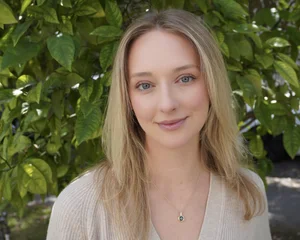 Marjolaine Bernstein, AMFT (CA #164685) — previously worked with adults on anxiety, trauma, relationships and life transitions as an MFT trainee at the Free Clinic of Simi Valley. An AASECT member working toward certification in sex therapy, she is the clinician to ask for when the aftermath of trauma has reached intimacy, desire or sex. CBT, mindfulness, attachment-informed work and psychoeducation.
All associates are supervised by Jasmeet Bhullar, LMFT #117019.
Because we don't solicit client testimonials as a policy, the voices below come from former students and a former clinical supervisor. Julia isn't in a teaching role that produces public testimonials, so these describe Fidel, who co-reviews this page, and Jasmeet, who supervises Julia's clinical work. What they describe is the same presence our clients meet in session.
"He is very 'present' in the milieu which allows for greater support and immediate intervention." Honey Bianchi, Program Director and LCSW on Fidel Quintanilla, AMFT, from his clinical supervision at Psychological Care and Healing Center
"He truly is an example of practicing from an authentic place by showing up as you are while holding space for curiosity and learning." Daniella Leon, MFT Trainee on Fidel Quintanilla, AMFT
"His expertise in all areas of the mental health world is so valuable, and he knows how to meet students where they are and usher them along the way." Samantha Rosenblum, MFT Trainee on Jasmeet Bhullar, LMFT
Who we work with.
Adults in their 20s and 30s, anywhere in California, who are carrying a single event that won't stay in the past, or a longer history they've been calling not that bad. People who can tell their story without feeling anything, and people who can't get halfway through it before their body takes over. Plenty of them are high-functioning on the outside. Sometimes that's the trauma's most convincing disguise.
What we don't do.
We provide weekly outpatient trauma therapy. We are not the right fit if you need a higher level of care: daily structure, an intensive outpatient or partial hospitalization program, or residential treatment. That includes times when trauma symptoms make it hard to keep yourself safe, or when substance use has become the main way of getting through the day. If that's where you are, we'll say so on the consultation call and help point you toward the right setting.
We don't begin memory processing while you're still in danger. If you're living with ongoing abuse or a situation that isn't safe yet, safety comes first, and the work starts with stabilization rather than EMDR. We also don't provide forensic or court-related evaluations, we don't prescribe medication (we'll coordinate with a psychiatrist when it's part of your care), and we don't treat children or adolescents.
If you are in crisis: call or text 988 for the Suicide and Crisis Lifeline, available 24/7 anywhere in the US. If you or someone else is in immediate danger, call 911. If you're in an abusive relationship, the National Domestic Violence Hotline is available 24/7 at 1-800-799-7233. Align does not provide emergency or after-hours crisis services.
Trauma therapy — common questions.
Does what happened to me count as trauma?
If it overwhelmed your ability to cope at the time and it still shapes how you feel, react or relate now, it's worth treating, whatever its size. Trauma isn't measured by how dramatic an event looks from the outside. Repeated emotional harm, neglect, or a relationship that slowly wore you down can leave as deep an imprint as a single frightening event. Other people had it worse is not a reason to wait.
What is EMDR, and do I have to talk about everything that happened?
EMDR (Eye Movement Desensitization and Reprocessing) is a structured, eight-phase therapy for traumatic and distressing memories. After a preparation phase, you briefly hold part of a memory in mind while following a back-and-forth stimulus, usually eye movements or tapping. Over repeated rounds the memory tends to lose its emotional charge. You still remember what happened. It just stops feeling like it's happening now. And no, you don't have to retell the whole story. You identify the memory, the image, the belief and the body sensation that go with it, and much of the processing happens internally. EMDR is recommended for PTSD by the World Health Organization and the VA/Department of Defense.
Can EMDR be done online?
Yes. EMDR adapts well to video sessions. Eye movements can follow a moving target on screen, or you can use self-administered tapping. Studies of EMDR delivered by video have found it can be effective, and many people find it easier to process difficult material from a space where they already feel safe. Your therapist will make sure you have ways to settle your body before any processing begins.
What are the three parts still on duty after trauma?
In our practice we describe trauma as leaving three protective parts on permanent duty: the alarm, which scans for danger and makes the body react before you know why; the shutter, which numbs, avoids and keeps you busy so the feeling never arrives; and the narrator, which writes the story where it was your fault, because a story you control feels safer than one you didn't. Underneath all three is the moment itself, still stored the way it was first stored. EMDR works with what's being guarded. Internal Family Systems (IFS) works with the guards. Once the guards trust the process enough to step back, the memory can be reprocessed, and they tend to stand down on their own.
EMDR, IFS or talk therapy: which is best for trauma?
It depends on what's stuck. EMDR is often the most direct route when there are specific memories that still feel live. IFS helps when the protective patterns are so strong that processing can't begin yet, or when the trauma is spread across years rather than tied to one event. CBT and ACT help with the beliefs and avoidance trauma leaves behind. At Align we usually combine them, and we'll recommend a starting point on the consultation call.
How long does trauma therapy take?
It depends on whether you're working with a single event or a longer history. Single-incident trauma can respond to EMDR within a relatively small number of processing sessions once preparation is in place. Complex or childhood trauma usually takes longer, often months, because more of the work is building safety and trust with the parts that have been protecting you. We won't promise a number. We'll tell you honestly what we're seeing after the first few sessions.
When is trauma too severe for weekly outpatient therapy?
When there's active suicidality, when you can't keep yourself safe between sessions, when dissociation means losing significant time or the ability to function day to day, when substance use has become the main way of getting through, or when you're still living in an unsafe situation, a higher level of care or a safety-first plan will serve you better than weekly sessions. We'll tell you honestly on the consultation call and help you find the right setting rather than starting work we can't safely see through.
More resources.
- The pain you inherited — Jasmeet Bhullar, LMFT — on intergenerational trauma and the grief that arrives with a family's history
- The self you're judging with information you didn't have — Jasmeet Bhullar, LMFT — on hindsight and the self-blame the narrator writes
- The recoil that keeps you honest — Jasmeet Bhullar, LMFT — on the pause between trigger and response
- The busy you're using to not feel — Fidel Quintanilla, AMFT — on productivity as a way of keeping feelings from arriving
- National Institute of Mental Health — the primary source on PTSD, symptoms and treatment research
- VA National Center for PTSD — research-based education on trauma and its treatment, for anyone, not only veterans
- American Psychological Association — the clinical practice guideline for treating PTSD
- EMDR International Association — what EMDR is and how its eight phases work
- 988 Suicide and Crisis Lifeline — 24/7 confidential support if you or someone you love is in crisis
- National Domestic Violence Hotline — 24/7 support for anyone in an abusive or unsafe relationship
If you're in crisis, please don't use this page as your point of contact. Call or text 988, or go to your nearest emergency room.
Related specialties.
- Anxiety & overthinking — when the alarm has generalized to everything
- Depression — the flatness that often follows years of the shutter
- OCD & intrusive thoughts — including real-event OCD and the intrusive thoughts that can follow processed trauma
- Family boundaries — when the harm came from, or still lives inside, your family
- Identity — rebuilding a sense of self that was organized around staying safe
- All topics & patterns — the full list of what we work with