

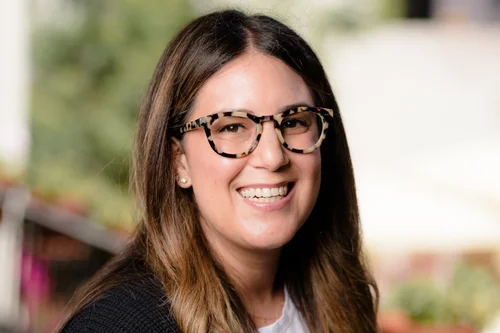
Molly BinenfeldLMFT · Therapy for disordered eating & body image
Licensed online therapist in California for adults navigating disordered eating, body image, and the pressure to be smaller — direct, warm, and rooted in real expertise.
Is this you?
Most of the people I work with have been doing food math in the background for years.
Counting, comparing, earning, compensating. A second job nobody applied for.
I trained at one of the top eating disorder treatment centers in the country, and the thing I most want you to know is this: the problem was never your willpower.
It's a culture that sells you a smaller body as the price of being enough — and then sells you the fix when you can't keep up.
My approach is direct and compassionate. I'm not going to nod along while you describe a war with your own body. I'm going to help you put the weapons down.
We'll work on the eating, the thoughts underneath it, and the harder thing too — letting yourself take up space and ask for what you need without apologizing.
You're allowed to be a person, not a project.
What the work can feel like.
For a lot of people the loudest thing in the room is the food math — the counting, comparing, earning, compensating that's been running in the background for years. Early on, the relief is hearing it named for what it is, and hearing clearly that the problem was never your willpower.
My approach is direct and compassionate. I'm not going to nod along while you describe a war with your own body. We work on the eating, on the thoughts underneath it, and on the harder thing too — letting yourself take up space and ask for what you need without apologizing for it.
It tends to feel less like being fixed and more like putting something heavy down — the constant negotiation getting quieter, a little more room to actually live.
You're allowed to be a person, not a project.
How I work.
My approach is direct yet compassionate, and grounded in real eating-disorder expertise. We work on the eating and the body image, and on the beliefs underneath — the diet culture, the comparison, the sense that you have to earn the right to take up space.
I draw on CBT and DBT for the patterns and the overwhelm, compassion-focused therapy for the harsh inner voice, and attachment work for the relationships tangled up in all of it. For more on why this kind of work changes things over time, see Why Therapy Works.
What I help with.
The themes that come up most in my work — each links to more on how Align approaches it:
Who I work with.
Young adults and adults navigating eating disorders, disordered eating, body image, and the self-worth and relationships tangled up with them. Individual and couples therapy. I consider your age, culture of origin and current cultural expression, gender identity, religion, sexual orientation, and anything else that shapes you.
Training & credentials.
- Licensed Marriage and Family Therapist, California BBS #151728
- Former Director of Clinical Services at a leading eating disorder treatment center
- Master's in Clinical Psychology, Pepperdine University
- Bachelor's in English, Colgate University
- Relationship Coach at OurRelationship; former MFT at Exodus Recovery Crisis Residential Treatment Program
Logistics.
Sessions are held entirely online, on a secure platform, anywhere in California. Availability is flexible: Sunday through Friday, mornings, afternoons, and evenings. The regular rate is $200 per session, with a limited number of reduced-fee slots and out-of-network reimbursement available. Start with a free 20-minute consultation.
Questions about working with Molly — answered.
What kinds of eating and body-image concerns does Molly work with?
The full range — from a diagnosed eating disorder to the quieter, sub-clinical food math and body preoccupation that runs in the background of so many lives. If your relationship with food, exercise, or your body is taking up more space than you'd like, that's enough to start.
What's Molly's training in eating disorders?
I served as Director of Clinical Services at a leading eating disorder treatment center, and trained at several organizations. Eating disorders and disordered eating are a true specialty for me, not a side interest.
Do I need a formal eating-disorder diagnosis to work with Molly?
No. Many of the people I work with have never been diagnosed and never will be — they're just tired of the constant negotiation with food and their body. You don't have to be 'sick enough' to deserve support.
What does a first session with Molly look like?
Mostly understanding what's been happening and what you want to be different — without judgment and without making you recite numbers. We go at a pace that feels safe, and we name where to focus.
How will I know if therapy with Molly is helping?
Often it's a quieter mind around food, a little more room to live, or a need you state without apologizing for it. I won't promise a timeline, but you'll have a clear sense of what we're working toward.