

Patterns, named. From the work.
Short essays from our clinical team on the everyday patterns that don’t make it into textbooks. Some of these will sound like you. Some won’t. That’s the point.
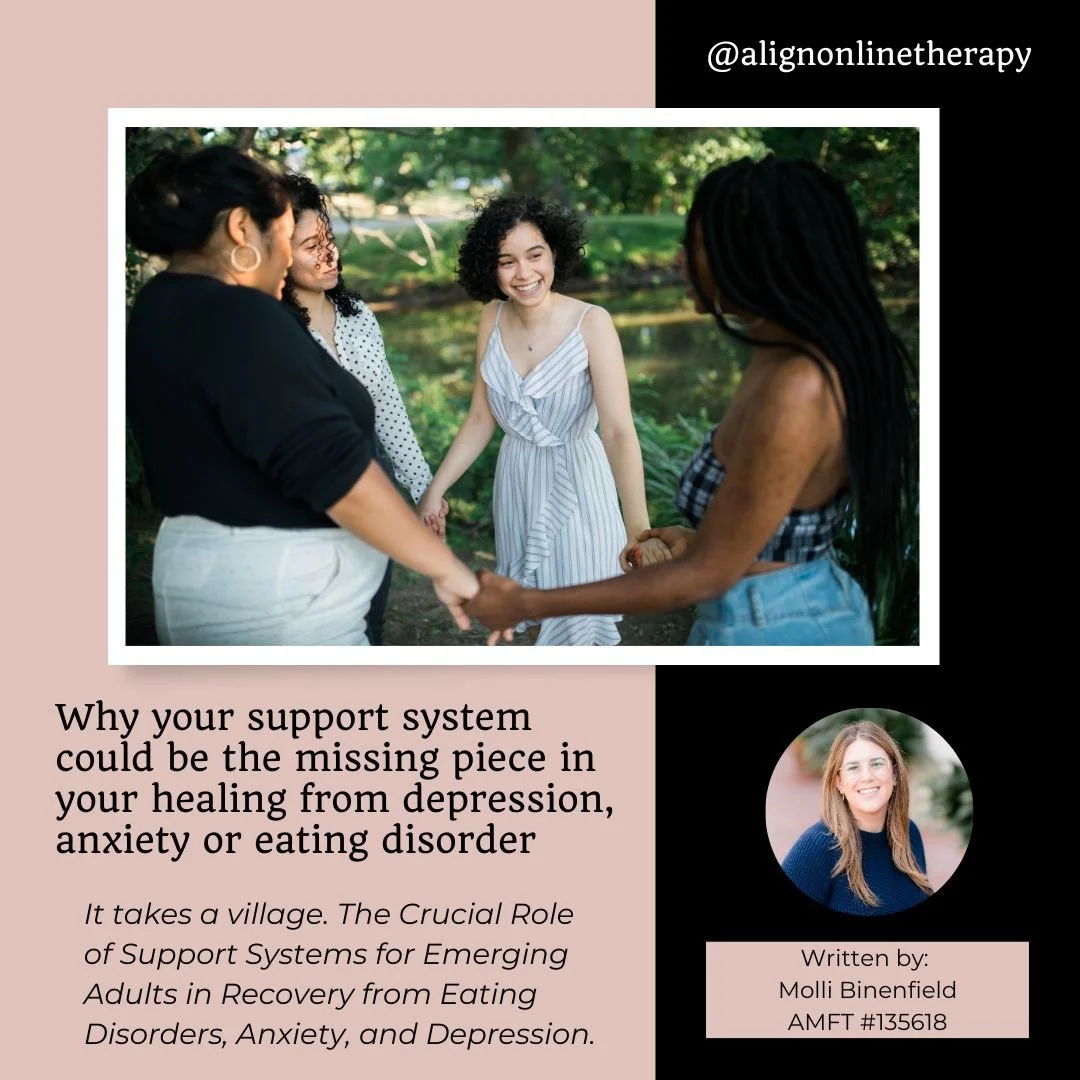
Why your support system could be the missing piece in your healing from depression, anxiety or eating disorder
It takes a village. The Crucial Role of Support Systems for Emerging Adults in Recovery from Eating Disorders, Anxiety, and Depression.

Financial Anxiety: How to stabilize in the short-term and recover long-term
One of the most important long-term solutions to your financial anxiety is seeking support from others. This may involve talking with trusted friends, colleagues/peers (outside of work), family members, joining a support group or seeking professional therapy/counseling.

Shedding labels: Growing from the anxious one to defining your own role
Despite all the effort you’ve put into therapy, the growth that you’ve experienced in your life, no one seems to notice except you. While people in your system may be slow to catch on, remember that other peoples’ ability to adapt to your changed behavior will likely be slow, and that your progress is still valid!

Social Media Burnout: Why confidence on social media doesn’t mean you can’t feel anxiety in real life
The life we post online and our real lives are often incongruent. Humans are naturally complex, unique, and multifaceted, and social media cannot capture every dimension of YOU. Anytime we feel a disconnect within ourselves, we often experience a range of mixed emotions, insecurities, and dissonance.

When is it okay to quit my job? Why quitting isn’t always giving up
Quitting is not always giving up, leaving a job that doesn’t meet your needs after you have taken these four key steps is actually a sign of growth.

What are Burnout Signs and Symptoms? And How to Build the Best Plan to Reduce Burnout in 2023
This is a guide to understanding burnout signs, symptoms, and building the best plan to reduce burnout.

Embracing Your Lived Experience
By learning to embrace our lived experience, we release the pressure that we “should” be a certain way and, instead, we just be. We learn to accept that “negative” emotions can exist without tearing us apart… without weighing us down.
Boundaries are love
The foundation of boundary setting is created through intention and care for yourself. There are many needs that you may be sacrificing in order to please those around you. As a result, you spend more time living for others than building a life that is truly aligned with your happiness and peace.

Identify, Focus, and Process: Resilience even without others understanding
It can be difficult to confront these feelings because you were not provided the safety to process openly and feel seen, heard and validated by the people you are closest to. You can practice these skills in resilience to overcome these toxic cycles and you deserve relationships that meet your needs.

Authenticity: The key to a healthy relationship
When you regularly accept your partner giving you less than what you deserve in an argument (or in a relationship), you are training your partner to say/do more things that do not meet your needs.

Why am I the only one with this problem?
The hardest part of anxiety and depression can be believing that you are the only person with these problems, or thinking you have a “me problem.” In fact, most of the issues people have are “we problems.”

Party of 1: The truth about change in therapy
What happens when I change but the people around me stay the same? Don’t they have to change, too? The short answer is: to see benefits and experience growth in therapy, the only thing that needs to change is you.

Discovering your Identity in Therapy
In therapy, the hope is you have a safe place to explore and get to know every part of yourself. You will discover the parts of you that you want to keep and strengthen and identify the parts of you that you are ready to let go.

Why do I feel so anxious in my new relationship?
If you spend the majority of your time wondering what your partner thinks of you, you are likely forgetting to ask yourself how you feel about the relationship and if your partner is able to meet your needs.
To the People who Don’t Lose
When you tell yourself losing is not an option, you’re really just denying reality and changing the rules of the game. The key to healthy relationships is accepting reality which sometimes means taking an L for the team and stepping up to lead better next time.

Starting Therapy in your 20s & 30s?
Since starting therapy, I’ve learned how to set boundaries with my loved ones, have a say in my life, and form an identity that is based on my own values, not just the values I was raised with.

What is Psychodynamic Therapy?
Psychodynamic therapy helps people gain insight into their thoughts, emotions, behaviors, and key relationships to reduce their distress and improve their quality of life. Therapists who practice the more modern, psychodynamic therapy, make the process feel natural, collaborative, and comfortable.

What do our patterns say about us?
What happens when we consistently use the same behaviors, make the same choices, and then find ourselves in the same situations? This is how we truly establish patterns.

I am nervous about starting therapy!
Nervous about starting therapy for the first time? Therapy is a collaborative process and requires both you and your therapist to develop the therapeutic relationship together.

Why are relationships so hard in your 20s and 30s?
Navigating the ins and outs of romantic relationships can be tough at any age. In addition, people in their 20’s and 30’s often encounter unique circumstances that make relationships feel daunting and confusing.